This article presents only general professional opinions and does not constitute legal, regulatory, financial, or compliance advice relating to your particular case. Reading it creates no consulting relationship with GRAYS™ Strategy. Figures come from the sources cited, as of the publication date, so please check them before you rely on them.
Our last technology article, Would you pick the same technology in three years?, asked you to write down what a new tool is for before you choose it. In our view, those outcomes matter even more after the tool goes live, when work often gets harder before it gets easier.
The first weeks can look slow
Economists have a name for a related idea. Erik Brynjolfsson, Daniel Rock and Chad Syverson call it the productivity J-curve. Big new technologies that touch many industries pay off after organizations change their processes, business models and skills, and much of that change is hard to see in the official numbers. Measured productivity dips at first and rises later (Brynjolfsson et al., 2021). Their work covers the whole economy, not health care.
We think the same idea applies when a care organization adds a new tool: the dip comes from the work of changing how people do their jobs.
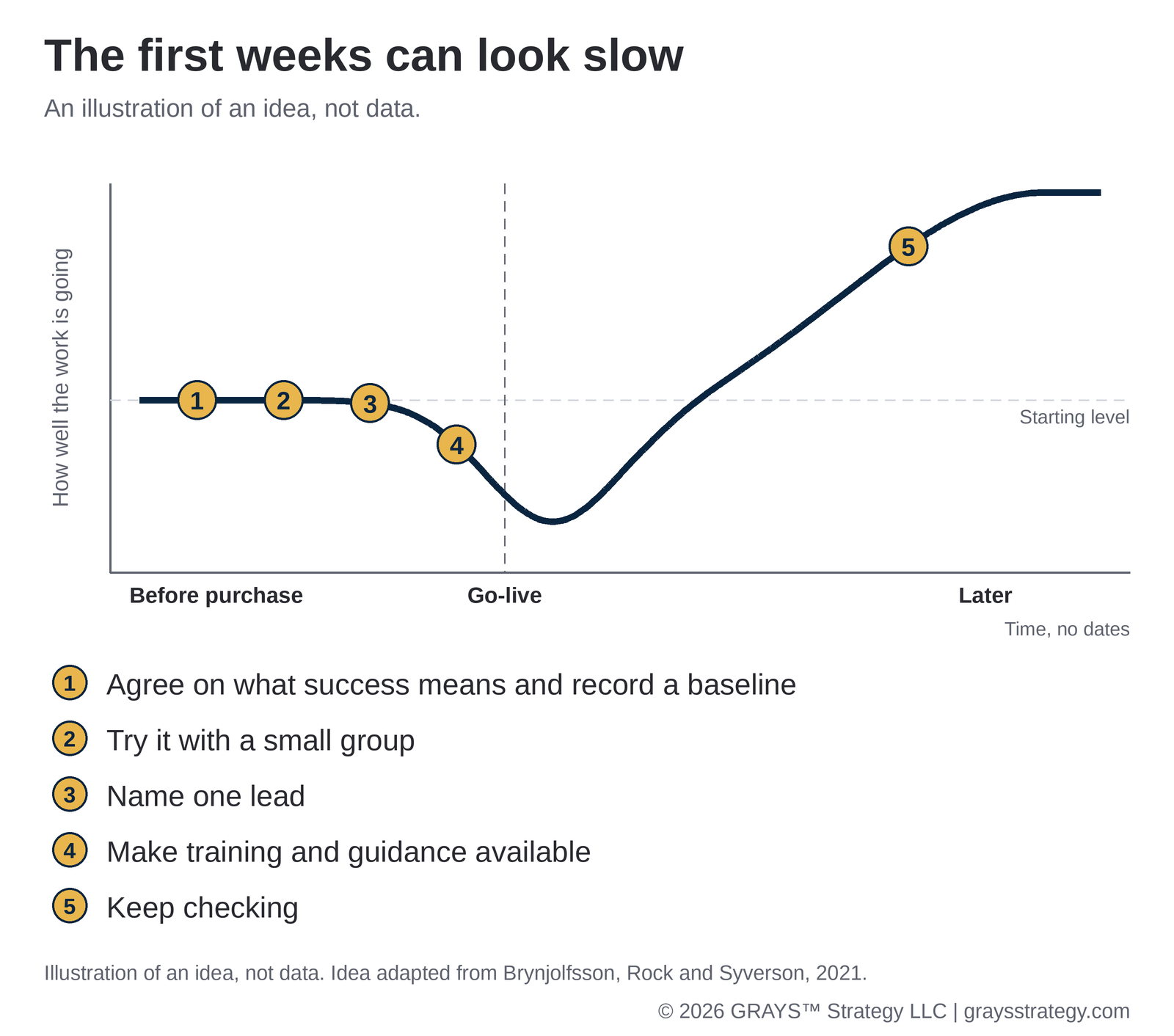
Figure 1. An illustration of the J-curve idea applied to a new tool. The shape is a concept, not data.
When your last new tool went live, how did the first month compare with the month before?
New AI tools show why measurement matters
Take ambient note-taking tools that just listen to the visit and write up the clinical note. In 2025 the Peterson Health Technology Institute looked at some of the early AI tools for admin work, largely in this category. The most consistent finding was less burnout for the clinicians (though a lot of that evidence was survey-based and short-term). Time savings were mixed and no clear financial return was demonstrated (Peterson Health Technology Institute, 2025).
The review is mostly about large health systems and doesn’t cover health centers. It doesn’t tell you what to expect. The guidance it does provide is to define what success looks like before you buy, and then track burnout, after-hours work, quality, and financial results.
The burnout finding is the reason to try these tools, since it’s the most consistent result in the review. Time savings and financial return are still unsettled, so we think it’s worth measuring both in your own organization.
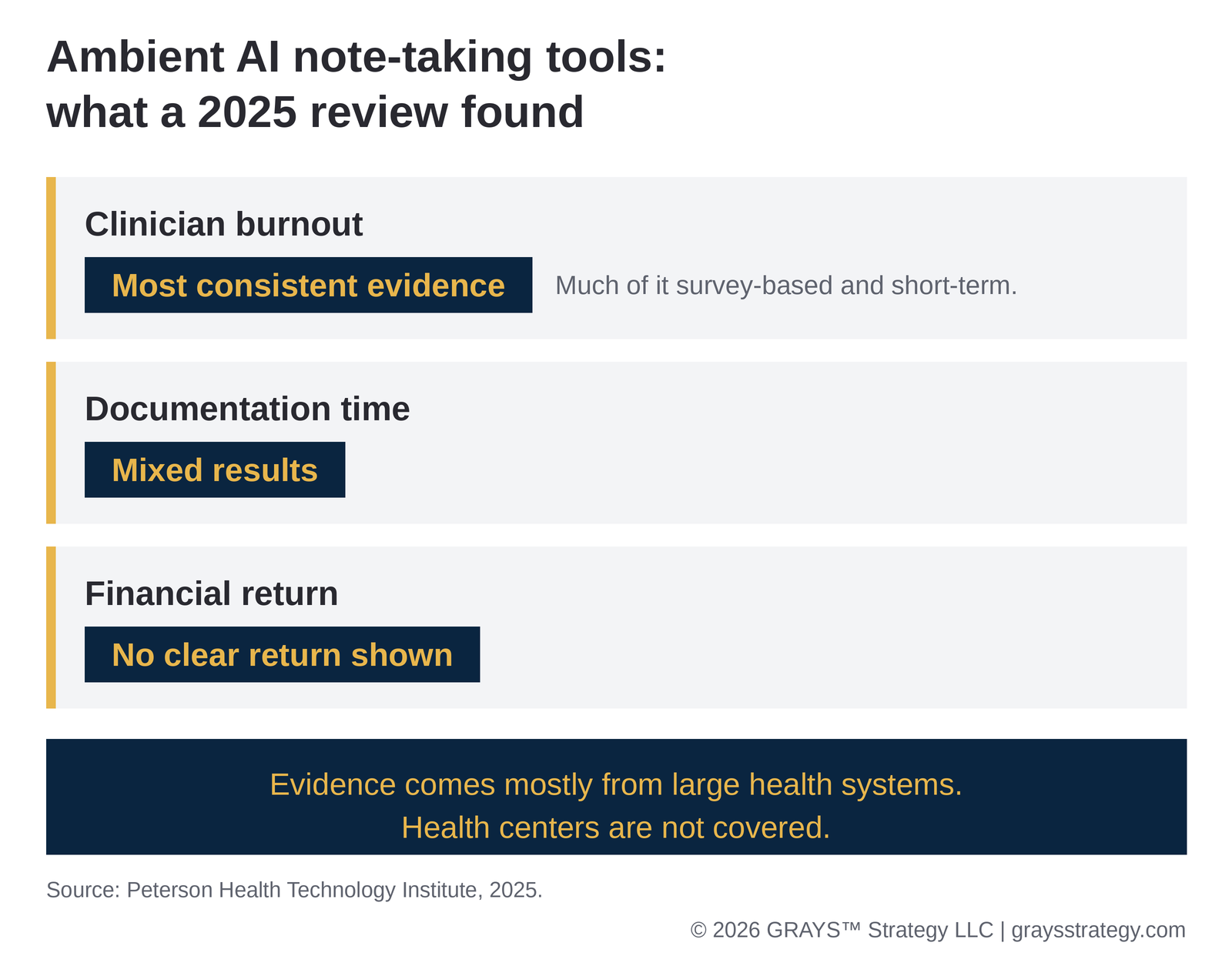
Figure 2. What a 2025 review found on ambient AI note-taking tools. The evidence comes mostly from large health systems; health centers are not covered.
Safety groups are keeping a close eye on the issue too. ECRI’s 2026 list of the top 10 health technology hazards puts misuse of AI chatbots at number one and health technology implementations that prompt unsafe clinical workflows at number nine. ECRI says health systems can promote responsible use of AI tools by setting up governance committees, training clinicians and regularly auditing how the tools perform (ECRI, 2026).
In September 2025 the Joint Commission and the Coalition for Health AI put out some initial guidance together. It says organizations should have a governance structure for their AI tools. It also says to test them on local data and keep monitoring them after launch (Joint Commission & Coalition for Health AI, 2025).
In June 2026 the Joint Commission followed with a voluntary certification for organizations that can show they use AI responsibly. It doesn’t certify individual AI tools, and an organization doesn’t have to be Joint Commission accredited to apply (Joint Commission, 2026).
What the research points to
Implementation researchers have studied what helps new tools take hold. The updated Consolidated Framework for Implementation Research lists those factors, drawing on a literature review and feedback from the people who use it (Damschroder et al., 2022). It lists what tends to help or hinder. It does not prove that acting on those factors improves results.
Before you buy, agree on what success means and write down where you stand today. The framework includes reflecting and evaluating as part of the implementation process, and the Peterson review points to defining success from the outset.
Then try the tool with a small group first. The framework names trialability, whether a tool can be tested on a small scale and undone, as a factor. The review found that interest and consistent use varied across clinicians.
Before go-live, name one person to lead the work. The framework gives implementation leads a role of their own. Make sure people can get the training and guidance they need, since the framework counts access to knowledge and information as a factor.
After go-live, keep checking. For AI tools, that means the local validation and monitoring as described in the Joint Commission guidance and the regular audits that ECRI points to.
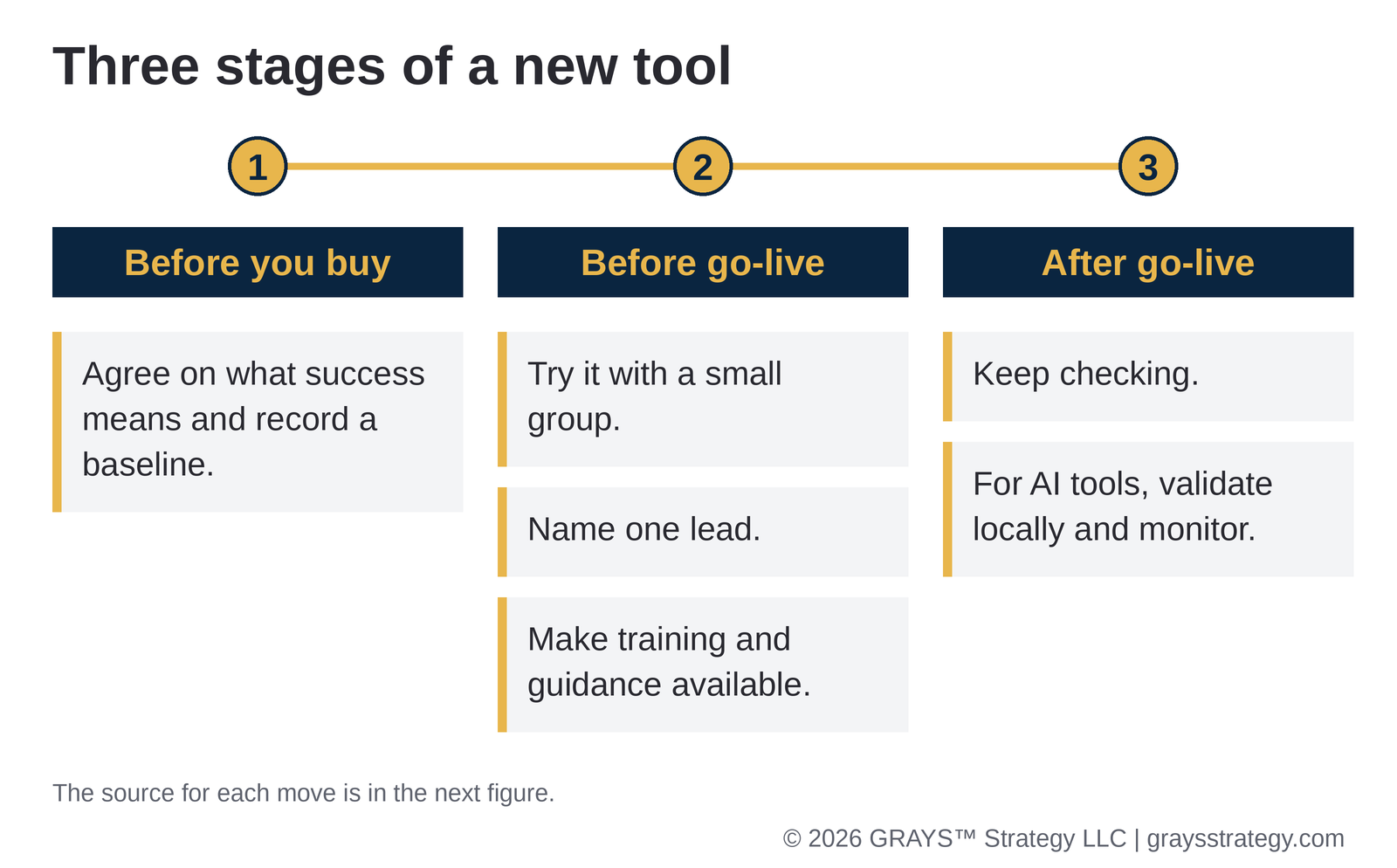
Figure 3. Five moves along the timeline of a new tool.
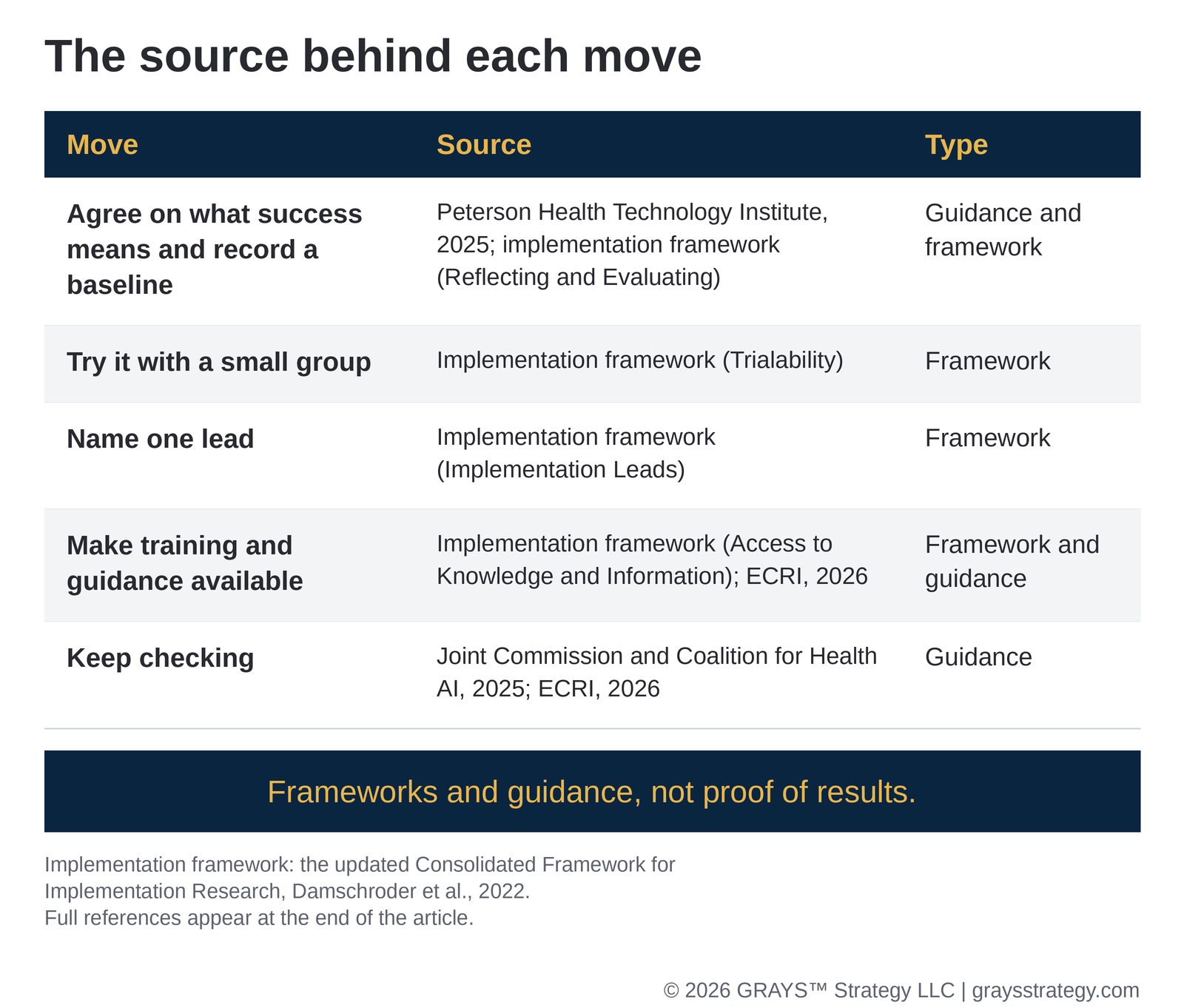
Figure 4. The source behind each move. Frameworks and guidance, not proof of results.
Read these moves as what researchers and safety groups say tends to help. They are not proof of results.

A test for your first 90 days
Who owns the period after go-live? Put a name and an end date on that role.
Then fill in the card below. Choose the measures that matter for the tool you bought, and list where you stood before go-live and where you stand now.
For a note-taking tool, the Peterson review suggests tracking adoption, burnout, after-hours work, note quality, and financial results together. For the other tools, you’d pick the thing you were hoping to change. If you didn’t have a baseline then just go with your earliest numbers and state that.
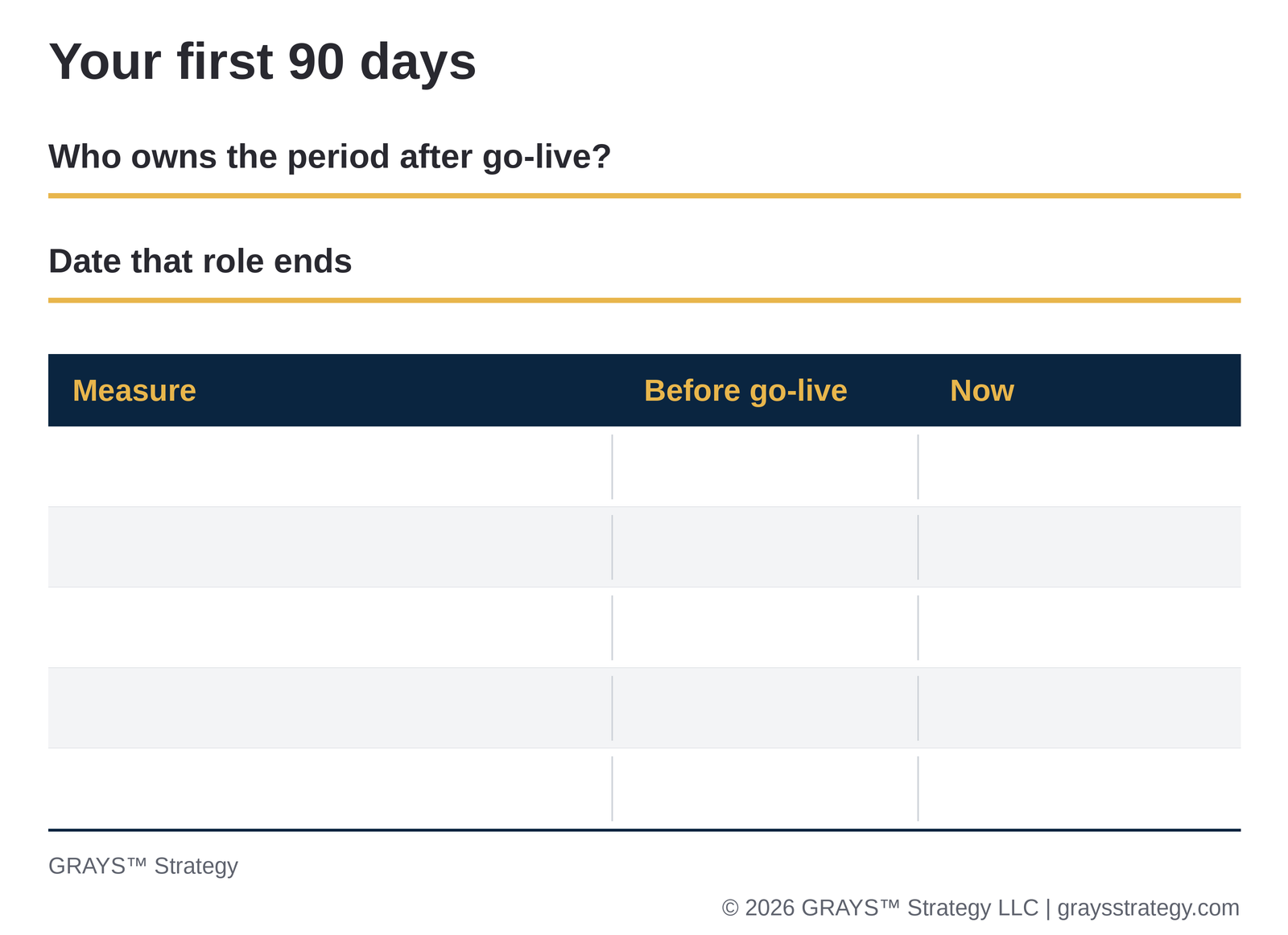
Figure 5. A first-90-days test card. Fill in each blank from your own records.
What would working mean for your next tool, in numbers you could check in 90 days?
We help care organizations through the first months after a new tool goes live. That means setting the baseline, choosing the measures, naming the owner, reading the results and deciding what to change.
We design strategy for your specific reality. If you’d like to talk through how this applies to your organization, we’re glad to start with a short conversation: info@graysstrategy.com.
Share this article on LinkedIn
References
Brynjolfsson, E., Rock, D., & Syverson, C. (2021). The productivity J-curve: How intangibles complement general purpose technologies. American Economic Journal: Macroeconomics, 13(1), 333–372. https://doi.org/10.1257/mac.20180386. Also available as National Bureau of Economic Research Working Paper 25148.
Damschroder, L. J., Reardon, C. M., Opra Widerquist, M. A., & Lowery, J. (2022). The updated Consolidated Framework for Implementation Research based on user feedback. Implementation Science, 17, 75. https://doi.org/10.1186/s13012-022-01245-0
ECRI. (2026, January 21). Misuse of AI chatbots tops annual list of health technology hazards [News release]. https://home.ecri.org/blogs/ecri-news/misuse-of-ai-chatbots-tops-annual-list-of-health-technology-hazards
Joint Commission. (2026, June 1). Joint Commission releases first of its kind exclusively designed for healthcare organizations, voluntary Responsible Use of AI in Healthcare certification [Press release]. https://www.jointcommission.org/en-us/knowledge-library/news/2026-05-responsible-use-of-ai-in-healthcare-certification
Joint Commission & Coalition for Health AI. (2025). The responsible use of AI in healthcare (RUAIH) [Guidance document]. https://digitalassets.jointcommission.org/api/public/content/dcfcf4f1a0cc45cdb526b3cb034c68c2
Peterson Health Technology Institute. (2025, March 25). Adoption of artificial intelligence in healthcare delivery systems: Early applications and impacts. https://www.phti.org/wp-content/uploads/2025/03/PHTI-Adoption-of-AI-in-Healthcare-Delivery-Systems-Early-Applications-Impacts.pdf
GRAYS™, GRAYS Method™, and Clarity in Complexity™ are trademarks of GRAYS™ Strategy LLC. © 2026 GRAYS™ Strategy LLC. All rights reserved. This content reflects general commentary and professional analysis current as of its publication date. It does not constitute legal, regulatory, financial, or compliance advice, and should not be relied upon as a substitute for professional counsel specific to your organization’s circumstances. Regulatory developments referenced herein may change after publication; readers should verify current status independently before acting.
More from Clarity Defined